Human Rights Day: Seeing Beyond Sight — Upholding the Rights of the Blind and People with Special Needs
Human rights are often spoken about in broad, powerful terms—freedom, dignity, equality. But their true meaning is found in how they are experienced by those who are most vulnerable in society. On Human Rights Day, we are reminded not only of our history, but of our ongoing responsibility to ensure that no one is left behind—especially people living with disabilities, including the blind and visually impaired.
🇿🇦 Why Human Rights Day Matters
In South Africa, Human Rights Day commemorates the tragic events of the Sharpeville Massacre, where peaceful protesters lost their lives fighting against unjust laws. It stands as a powerful reminder of the cost of inequality and the importance of protecting human dignity for all.
Today, the struggle continues—not in the same form, but in quieter, often overlooked ways. For people with special needs, especially those who are blind, the fight is about access, inclusion, and equal opportunity.
👁️ Seeing the Invisible Struggle
For a blind person, the world is not just dark—it is often inaccessible.
Simple daily activities that many take for granted can become major barriers:
- Reading standard printed materials
- Navigating public spaces without tactile guidance
- Accessing digital platforms that are not screen-reader friendly
- Finding employment in an environment that lacks accommodation
Despite living in a constitutional democracy that promotes equality, many visually impaired individuals still face systemic exclusion.
⚖️ Human Rights Are Not Optional
South Africa’s Constitution is one of the most progressive in the world. It guarantees:
- Equality before the law
- Human dignity
- Freedom and security
But rights mean little without implementation.
Upholding human rights for people with special needs means:
- Designing inclusive infrastructure
- Providing accessible education materials (Braille, audio, assistive tech)
- Ensuring workplaces accommodate all abilities
- Promoting awareness and empathy in communities
🧠 The Power of Inclusion
Inclusion is not charity—it is justice.
When we create spaces that accommodate the blind and visually impaired, we are not doing them a favour—we are fulfilling a moral and legal obligation.
Consider this:
- A blind student with access to proper tools can excel academically
- A visually impaired professional can thrive in the workplace with the right support
- A society that embraces diversity becomes stronger, more innovative, and more humane
🔊 Voices That Must Be Heard
People with disabilities are often spoken about—but not spoken with.
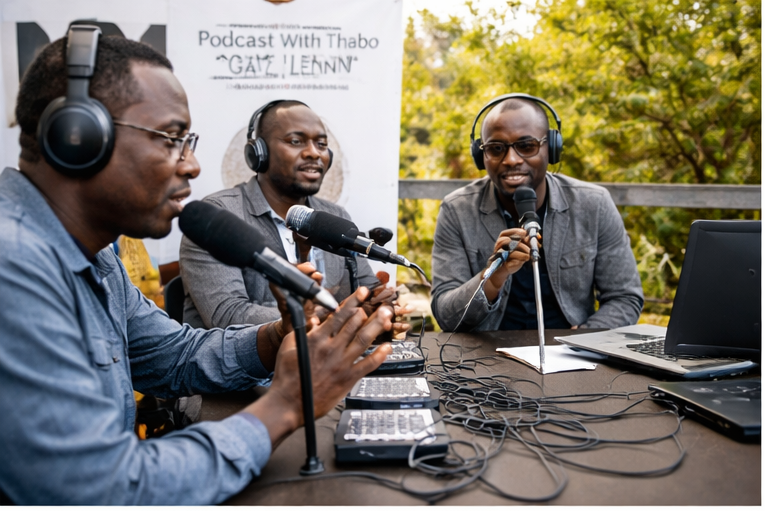
Platforms like Podcast With Thabo: Gata Lenna play a crucial role in:
- Amplifying marginalized voices
- Creating awareness
- Challenging societal attitudes
We must listen to the lived experiences of blind individuals and allow them to lead the conversation about their own rights and needs.
🤝 What Can We Do?
Human rights begin with everyday actions:
As Individuals:
- Be mindful and respectful
- Offer assistance, but never assume
- Educate yourself about disability inclusion
As Businesses:
- Make websites and services accessible
- Hire inclusively
- Provide assistive technologies
As Government & Institutions:
- Enforce disability rights policies
- Invest in accessible infrastructure
- Support organizations working with people with disabilities
🌍 A Call to Action
Human Rights Day should not just be a public holiday—it should be a personal commitment.
A commitment to:
- See beyond physical limitations
- Break down barriers
- Build a society where everyone, regardless of ability, can live with dignity
Because true freedom is not measured by what the majority can do—but by how well we uplift those who are often overlooked.
🎧 Closing Thought
On this Human Rights Day, let’s ask ourselves:
Are we truly creating a world where everyone belongs?
If the answer is no, then the work is not done.
And through conversations like those on Podcast With Thabo: Gata Lenna, we move one step closer to a more inclusive, compassionate, and just society.
